Thirty years ago a popular Brazilian soap opera, "Pecado Rasgado", had a catchy title tune, the refrain to which was "Sin doesn't exist below the equator". You can find the opening sequence with the title music on YouTube.
That sin doesn't exist isn't an exaggeration, but there are distinctly different attitudes. We remarked here over a year ago on the fairly relaxed Brazilian attitude towards naked children in the media. I haven't returned to that as further examples appear, because that would involve nearly weekly updates. And there's a name for that sort of thing, and apparently an audience.

Family newspaper
Newspaper readership in Brazil is far lower than in the United States - the newspaper of record, the Folha de S. Paulo, sells a bare 300,000 copies. That means that the audience is somewhat more select, and somewhat more sophisticated, than the average American paper. Even so, it's a "family newspaper."
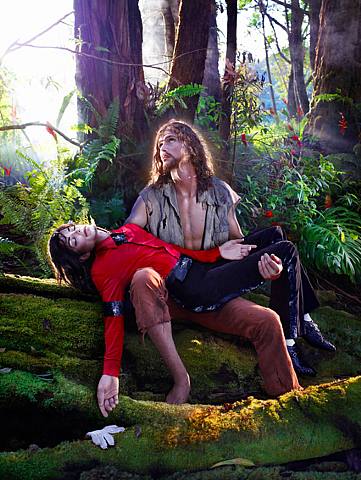
A week ago, one of the Sunday supplements, a glossy tabloid-size magazine titled "Serafina", had an illustrated interview with photographer David LaChappelle.
The magazine, from the ads, is aimed at an adult audience, though there is an article on a parrot puppet originally designed to appeal to children, on a morning TV show. Other articles are on Spanish bullfighters, Prince Charles's country house, and the Copacabana Palace Hotel.
Adult nudes
It's long been a tradition in Western art that child nudity is perfectly acceptable and non-sexual. A Pope ordered that Michelangelo's nudes in the Sistine Chapel be retouched for "decency", there being if I recall a special admonition to cover those with their bottoms facing the viewer. But there was no problem at all with frolicking cupids or the naked infant Christ.

In recent decades, adult female nudity has become widely acceptable. Dicks, however, are something else. A strange reversal, from adults being verboten but naked boys being all right yet infant girls excluded, to naked adult women being fine, but adult men and children of either sex being indecent.
No complaints
I've included links to three of the photos printed in the newspaper, from the site of Maruani & Noirhomme Gallery in Belgium which held an exibit, that from the site closed this month. The picture are about six inches high, and so the resolution is vastly better than non only the inline pictures here, but than the larger images to which they're linked.
In this Sunday's Folha, the ombudsman says that it's a "sign of the times" that she received no complaints at all about the frontal nudity. Several about cruelty to animals, but none on the naked men.
Geographic differences
Perhaps it's really is being south of the equator, perhaps there are other cultural factors. During much of the year, in much of the country, the most comfortable clothing is as little as you can get away with. The country makes no secret of the Indian ancestry shared by much of the population, or that there are still Indians in parts of the country who wear nothing. Nudity in the theater is so common as to not be worth comment.
And Speedos are standard beach wear for males, except during the teen years when board shorts enjoy a brief popularity. The notion that men are or ought to look as if built like Ken dolls has never enjoyed currency in Brazil.
Changing times
Fashions change. The notion that current fashion somehow expresses universal moral standards is one that has always been popular. Once anarchists were a great threat, now they're quaint. And as we've shown, the varieties of nudity that are acceptable has shifted.
A hundred and fifty years ago, it was uncommon for men to swim in anything other than their skins. A hundred years ago, proper gentlemen wore wool getups that did not indecently expose their chests. It was fifty years from Michelangelo painting the Sistine Chapel, to the genitalia being painted over.
And two hundred years ago, the papal choir that sung in the chapel included castrati, who could sing with the celestial voices of women. The practice was only finally banned in 1903. It was a career option for poor boys - or a quick florin for their families. One online article suggests it was no more likely to lead to a successful musical career in the 1770s then, than letting one's hair grow long did in the 1970s.
We of course are aghast at the genital mutilation of boys, yet circumcision is still widely practiced. How can we know for which of our practices our descendants will condemn us?




 Postagens


